How SR-Tiget’s development facilities are key to turn research into advanced therapies, and why they represent a new professional frontier.
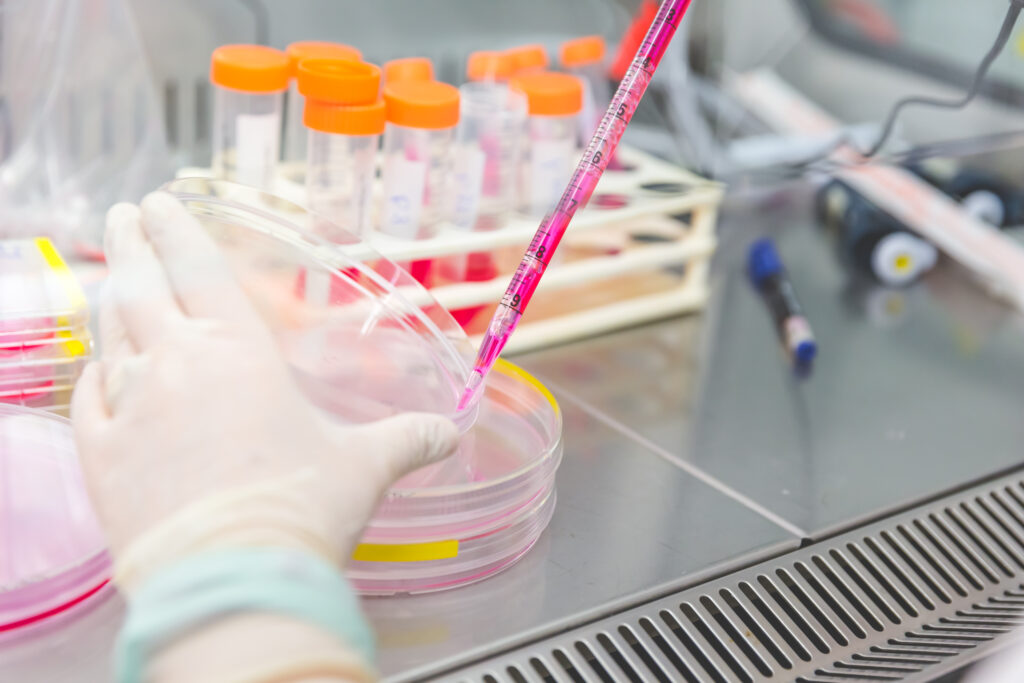
What happens between a scientific discovery and a therapy delivered to a patient?
This is a question that rarely finds space in the narrative of biomedical research. We are used to reading about breakthroughs in the lab or clinical results reaching patients. Much less often do we pause to consider what happens in between: a complex, highly technical and decisive phase, without which no innovation could ever become a therapy.
This is precisely where development facilities come in, structures that translate research outcomes into therapies for clinical use. They are not traditional research laboratories, yet neither are they industrial settings. Instead, they represent a point of convergence between different worlds, where scientific, technological and regulatory expertise align towards a single goal.
The most complex step: from research to the clinic
Turning a scientific discovery into a clinical therapy is anything but linear. It is, in fact, one of the most demanding stages in the entire biomedical pathway, because it requires translating results obtained under experimental conditions into robust, scalable and patient-safe processes.
In research laboratories, work typically happens on a small scale, with constantly evolving experimental protocols and reagents designed for research rather than clinical application. What works in this context does not automatically translate into clinical use.
As Marina Radrizzani, Head of the Process Development Lab (PDL) at SR-Tiget, explains: “What we do in our laboratories is take the researchers’ idea and make sure the product they have designed can become applicable in the clinic. This is particularly challenging for the Advanced Therapy Medicinal Products (ATMPs) we work on, which are ‘living’ products made of genetically modified cells”.
The first step, therefore, involves a deep adaptation process: identifying materials and process conditions that meet the stringent requirements for clinical use.
One of the critical junctures is scale-up, moving from small quantities of cells to the much larger volumes required for clinical application. “While a researcher may have modified a few million cells in small plates and millilitres of culture medium, our task is to reach billions of cells, which may require several litres of medium and much larger systems”. This is not simply a matter of increasing volume; it requires a complete redesign of production systems, which must become more controlled and capable of ensuring consistent quality.
This complexity is further compounded by the need to develop bespoke quality control methods. In advanced therapies, standardised protocols are not always available: each product requires dedicated assays to assess identity, purity, safety and functionality. “These are highly innovative products, so there is no standard way to control them. Methods often have to be designed case by case”.
Finally, all of this must align with a highly stringent regulatory framework. Processes need to be transferable to GMP (Good Manufacturing Practice) environments, where every step is tracked, standardised and validated for clinical use.
It is precisely to address this level of complexity that SR-Tiget’s development facilities have been established.
A rare model: SR-Tiget’s translational ecosystem
If development activities represent a critical step, the way they are embedded within an academic research system is what truly makes the difference. This is precisely where the SR-Tiget model stands out.
In many settings, development is outsourced or handed over to industrial partners at a later stage. At SR-Tiget, by contrast, these capabilities sit within dedicated, in-house facilities, fully integrated into the institute. The result is a translational ecosystem that directly connects experimental research, process development and clinical application.
This approach remains far from common. As Marina Radrizzani notes, “It is very rare to find this kind of facilities within an academic institute”. It is a deliberate strategic choice: to retain critical expertise in-house and to support the development of advanced therapies more closely at every stage.
In practice, this model takes shape as a coordinated network of specialised development facilities. Alongside the Process Development Lab, key development facilities include the GLP Test Facility, that runs preclinical studies, and the Clinical Lab, which analyses the samples of patients who underwent gene therapy treatments. Together, they form an integrated pipeline, where each step - from product characterisation to validation - connects seamlessly with the next.
The advantages are substantial. First, faster knowledge transfer: close proximity between research and process development teams reduces delays and friction. Second, greater control over know-how, which remains within the institute and can be continuously refined. And third, an increasingly central dimension: sustainability. As Radrizzani highlights, “Keeping the entire pipeline in-house is also a sustainability choice, as it helps contain costs compared to outsourcing”.
This is a concrete example of how research does more than generate knowledge: it is designed from the outset to reach patients. An ecosystem in which every component is designed not only to make this transition possible, but to make it more efficient and effective.
Inside the SR-Tiget Process Development Lab
At the heart of this ecosystem lies the Process Development Lab (PDL), one of the key structures in the path that brings a scientific discovery into the clinic. This is where research begins to take the form of a process, acquiring the essential attributes of reproducibility, control and scalability.
The Lab’s work focuses on two main areas. On one side, the development and manufacturing of lentiviral vectors, which are essential tools for delivering genetic material into cells. On the other, the manipulation and genetic modification of cells, particularly haematopoietic stem cells and T lymphocytes, which underpin many advanced therapies.
The PDL operates as a cross-functional platform, supporting multiple research groups across the institute. As Marina Radrizzani explains, “We produce high quality vectors for SR-Tiget research groups and develop methods for the preparation and quality control of innovative products arising from their work”. This means working simultaneously on multiple projects, each with its own specific requirements, while maintaining a systematic and standardised approach.
At its core, the facility’s work centres on process development. Starting from protocols established in research laboratories, the PDL refines and adapts them for larger-scale application under controlled conditions. This involves not only scale-up, but also standardisation: every step must be precisely defined, reproducible, and aligned with the requirements for clinical use.
The PDL therefore occupies a critical position in the development pipeline, just upstream of GMP production. Its goal is to define processes and quality control methods that can be transferred to certified facilities, where manufacturing for clinical trials takes place. As Radrizzani notes, “We bring processes to the point where they can be applied under GMP, and then transfer these technologies to the facilities that will carry out production for clinical studies. At this stage, integration with Fondazione Telethon’s functions - CMC, Regulatory Affairs, Quality Assurance, Logistics and Clinical Development - is essential”.
Innovation in development: the role of industrial collaborations
When discussing innovation in gene therapy, attention tends to focus almost exclusively on scientific breakthroughs. Yet an equally decisive share of innovation takes place in processes, technologies and development models, the ways in which therapies are engineered, scaled and made viable in real-world settings.
This is precisely where development facilities become a fertile ground for collaboration with industry, particularly with companies developing advanced technologies for cell processing and manufacturing.
The collaboration between SR-Tiget, Cytiva and other companies within the Danaher group, as part of the Danaher Beacon programme, provides a concrete example of this approach. The Beacons are strategic partnerships designed to accelerate the development of new technological platforms in advanced medicine, bringing together research institutes and industry leaders in process technologies.
Within this framework, the Process Development Lab plays a central role. Its work targets some of the key bottlenecks in gene therapy: lentiviral vector production, cell engineering and process scalability. As Marina Radrizzani explains, “We will work to apply and optimise technologies for vector production in bioreactors, making the process more scalable and more controlled”.
The goal is to develop more standardised and transferable platforms, capable of adapting to different products and applications. This involves not only upstream production, but also downstream processes - purification and quality control - aimed at achieving higher efficiency and yield. As Radrizzani notes, “If you can increase process yield, a single batch of vector can be used to treat more patients”.
Another key area of innovation lies in the introduction of increasingly automated systems for cell processing, alongside emerging technologies such as gene editing and use of lipid nanoparticles, all aimed at making processes more controlled, reproducible and scalable.
These collaborations clearly show that innovation is not limited to discovering new biological mechanisms. It also depends on the ability to build scalable, reliable and economically sustainable processes. In other words, it is through development that gene therapy becomes not only possible, but accessible to a growing number of patients.
In this sense, development facilities confirm their role not just as a bridge between research and the clinic, but as one of the key environments where the future conditions of advanced medicine are actively shaped.
A career path for those who want to bring research to patients
If development facilities are a critical step in the gene therapy pathway, they also represent a still under-recognised career opportunity, particularly for those coming from an academic background.
In the Process Development Lab, as in similar environments, teams are made up of scientists with a strong research background, often PhDs with many years of laboratory experience. The work they encounter is fundamentally different from that of a traditional academic researcher, yet no less impactful.
This is not about pursuing an individual project or building an independent research line. Instead, it is a highly team-oriented environment, where individuals contribute to multiple projects at once, applying their expertise towards a shared goal. As Marina Radrizzani explains, “None of us works on an individual project; our work is fully cross-functional and driven by collaborative, team-based efforts”.
This collaborative dimension goes hand in hand with strong multidisciplinarity. Day-to-day work sits at the intersection of research, development, quality, regulatory and clinical domains, requiring not only advanced technical expertise but also the ability to engage with diverse professional roles and integrate different perspectives.
It is also a path that requires clarity of intent. As Radrizzani points out, “It’s important to understand that this is not research in the strict sense, but translational development work that is much more focused on application in humans”. For some, this represents a significant shift. For others, it is precisely what makes the role compelling.
What drives many professionals in this space is the opportunity to achieve a more direct and tangible impact. As Radrizzani notes, “The goal is to work on something where you can see a closer application, making a positive contribution to a patient’s treatment”. In this sense, working in a development facility places your contribution at a unique point along the value chain: close enough to research to grasp its complexity, and close enough to the clinic to witness its real-world impact.
It is not research in the traditional sense. But it is what allows research to reach patients.
