Obtaining a diagnosis is crucial for those affected by a genetic disease: it means giving a name to their disease, offering the possibility of accessing the available information, either through the international scientific literature or through the experience of other families, and to improve the care and management of both everyday life and emergency situations.
Diagnosing a disease at the molecular level also allows obtaining biological and genetic information, paving the way to targeted genetic counselling, both concerning the possibility of a recurrence of the disease in any new children, and in brothers/sisters or other relatives.
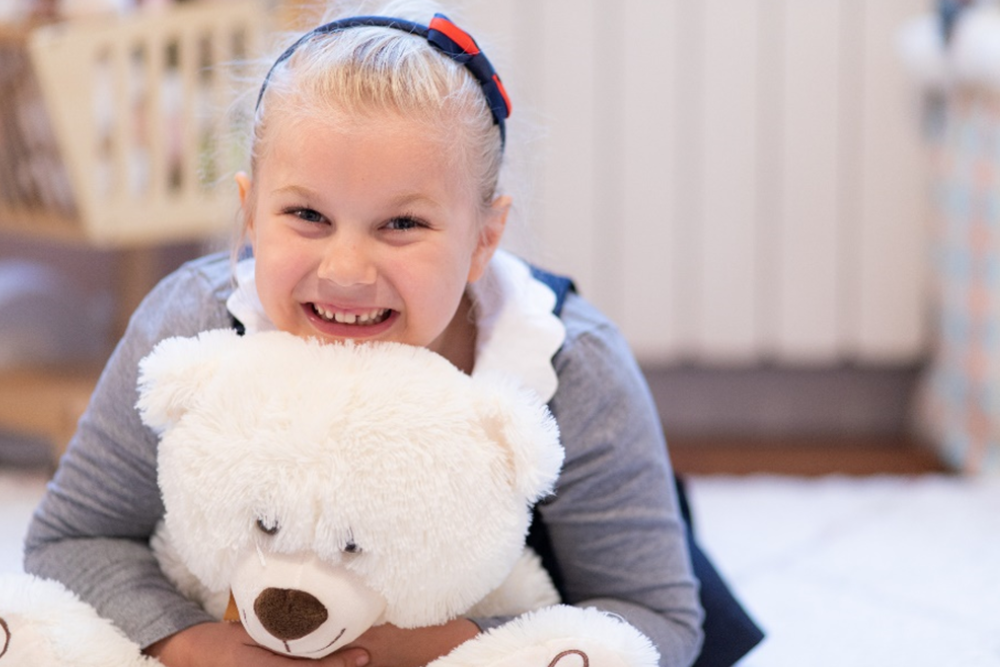
Programme snapshot
Despite the numerous efforts of the medical and scientific community and advances in DNA analysis, there are still thousands of very rare genetic diseases with unknown causes or that remain undiagnosed.
In order to provide an answer to undiagnosed patients, mainly in childhood, and to begin to fill this need, the Telethon Foundation has devised a unique programme in Italy coordinated by the Telethon Institute of Genetics and Medicine (Tigem) in Pozzuoli (NA) and launched in 2016: the Undiagnosed Diseases Programme (TUDP) of Fondazione Telethon.
As described in Genetics in Medicine OPEN (the journal of the American College of Medical Genetics and Genomics), in its first eight years (2016–2023) TUDP covered more than 1,300 pediatric cases evaluated at 22 specialist centers in Italy.
The program achieved a definitive genetic diagnosis in 49% of enrolled children, a diagnostic yield that compares favourably with other undiagnosed disease initiatives worldwide. Pathogenic variants were identified across 330 genes, reflecting the wide genetic diversity of childhood-onset rare conditions. More than 70% of causative variants were de novo, arising spontaneously with no prior family history.
The TUDP network
The TUDP Clinical Centre Network comprises an increasing number of clinical centres across Italy. Genetic analysis is carried out at Tigem laboratories and at the Azienda Ospedaliera Universitaria - Università degli Studi della Campania Luigi Vanvitelli on samples collected and sent to the laboratories by the clinical centres, upon informed consent of the patient or his/her family members.
The researchers of the undiagnosed diseases programme use cutting-edge technologies such as next-generation sequencing of DNA and RNA (Next Generation Sequencing, or NGS), i.e. whole genome sequencing (WGS) or transcriptome sequencing (RNA-seq). Reanalysis of unsolved cases is performed with advanced bioinformatics tools, or following the availability of more advanced techniques or new genetic and clinical information, also thanks to comparison with data in other international databases.
"FOR US, THE DAY OF DIAGNOSIS REPRESENTED A REBIRTH, A NEW STARTING POINT. HOPE WAS REKINDLED, WHICH WOULD SOON BE DOUBLED". 
"THE MOMENT WHEN WE GOT THE DIAGNOSIS," SAYS ROBERTA, "WAS LIBERATING, BECAUSE AFTER WE HAD WRITTEN IT OFF, WE STARTED TO UNDERSTAND HOW TO BEHAVE." 
"BEING ABLE TO GIVE A NAME TO THE PROBLEM, HOWEVER, IS A BIG STEP FORWARD: NOT KNOWING DESTABILISES YOU, YOU NEVER KNOW WHAT WILL HAPPEN, WHETHER IT WAS YOU WHO TRANSMITTED THE DISEASE TO YOUR CHILD, WHAT YOU HAVE TO DO".
1 / 3
As of 2024, the TUDP Network involves 22 Italian paediatric hospitals:
- IRCCS Fondazione Stella Maris (Pisa)
- Azienda Ospedaliera Universitaria di Sassari (Sassari)
- Università di Torino
- Policlinico Bari
- Istituto Neurologico Carlo Besta (Milano)
- Policlinico Vittorio Emanuele (Catania)
- Istituto Giannina Gaslini (Genova)
- Ospedale Pediatrico Anna Meyer (Firenze)
- Ca' Granda Ospedale Maggiore Policlinico (Milano)
- Fondazione IRCCS San Gerardo dei Tintori (Monza)
- Ospedale Sant'Anna (Como)
- Università Federico II (Napoli)
- Associazione Oasi Maria Ss. Onlus (Troina)
- La Sapienza Università di Roma
- Santobono Pausilipon (Napoli)
- Università Vanvitelli (Caserta)
- Università Cattolica del Sacro Cuore (Roma)
- Azienda USL-IRCCS di Reggio Emilia
- Ospedale Salesi - Ospedali Riuniti Ancona
- Azienda Ospedaliero-Universitaria di Ferrara
- Ospedale Cardarelli (Napoli)
- IRCCS Eugenio Medea (Brindisi)
For any inquiries about the TUDP, send an email to: telethonscience@telethon.it
